What Time Is It In London Right Now Unveiling GMT BST Secrets

London’s clock does not merely tick—it dictates global rhythms, from financial markets to flight schedules, as Greenwich Mean Time and British Summer Time shape modern life. Behind the simplicity of checking the hour lies a complex history, where scientific precision meets political power, and where a single time zone influences economies worth trillions. The adoption of GMT in 1884 did not just standardize time; it redefined how nations synchronized their futures, turning an abstract concept into the backbone of international coordination.
Yet for travelers, professionals, or curious minds, the question What Time Is It In London Right Now often sparks confusion amid daylight saving shifts, UTC offsets, and digital discrepancies. Whether navigating a business call across continents or planning a transatlantic flight, understanding London’s time—its past, its mechanisms, and its modern applications—is more than a practical skill. It is a window into the invisible forces that keep the world’s gears turning, from the Royal Observatory’s atomic clocks to the algorithms powering smartphone widgets. This exploration decodes the science, the culture, and the critical role of London’s time in an interconnected world.
Understanding Time Zones: The Basics of GMT and BST
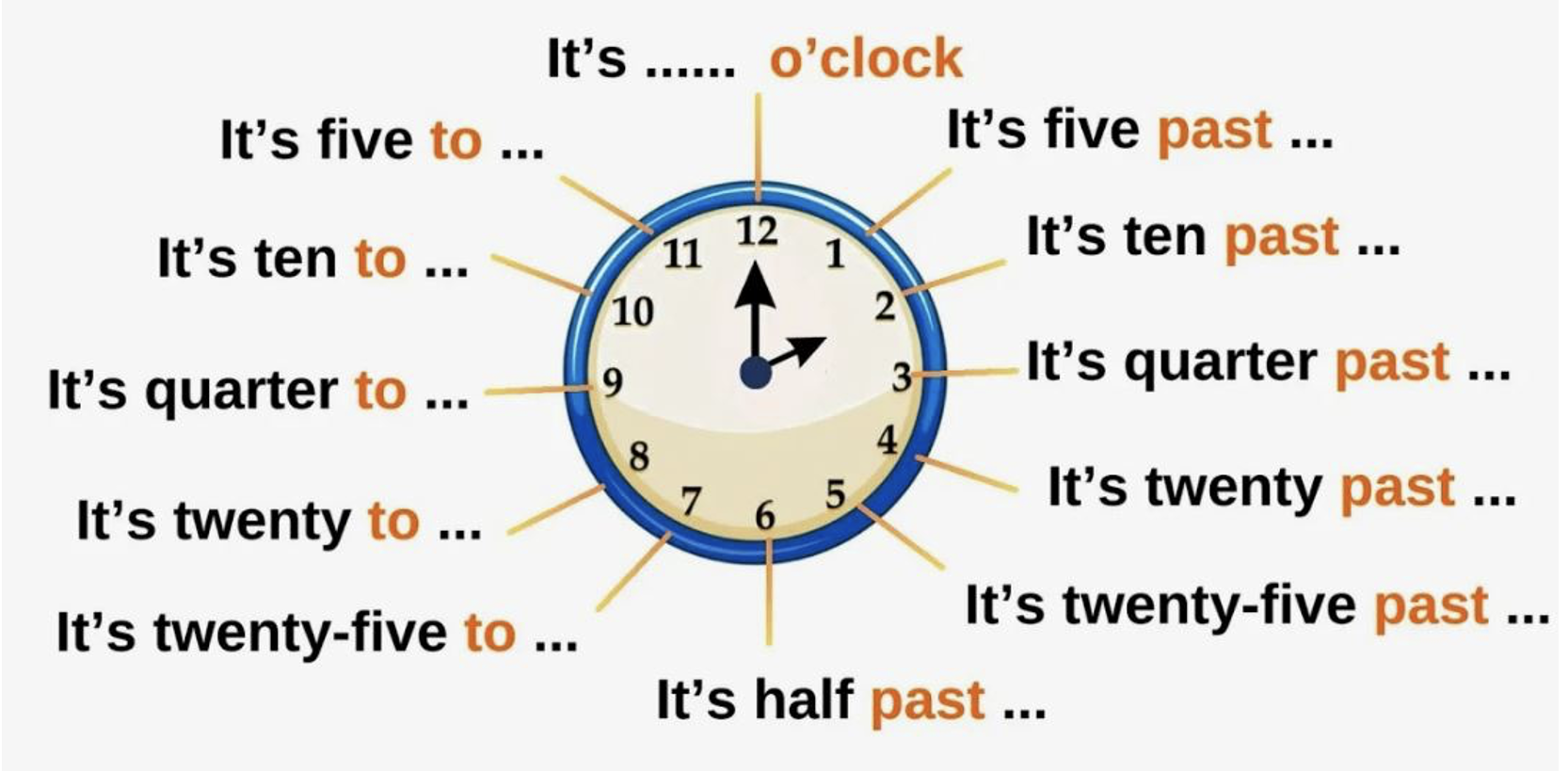
The concept of time zones revolutionized global coordination, and at the heart of this system lies Greenwich Mean Time (GMT) and its seasonal counterpart, British Summer Time (BST). Rooted in the historical significance of the Prime Meridian—the 0° longitude line passing through the Royal Observatory, Greenwich, London—GMT emerged as the world’s standard for timekeeping. Its adoption was not merely scientific but a political and logistical necessity, shaping industries from railways to aviation. Meanwhile, BST introduces seasonal adjustments, reflecting humanity’s attempt to harmonize natural daylight with daily schedules. This section explores GMT’s origins, its distinction from BST, and its critical role in global synchronization, while debunking common misconceptions and illustrating how time zones function across the planet.
Historical Context of Greenwich Mean Time (GMT) and Its Global Adoption

The establishment of GMT traces back to the 19th century, when railway expansion in Britain demanded a unified time standard. Before GMT, cities operated on local solar time, causing confusion as trains traversed regions with differing sun-based clocks. In 1840, Sir Sandford Fleming, a Canadian engineer, proposed a 24-hour global time system divided into time zones, but Britain’s influence solidified GMT as the reference point. The International Meridian Conference of 1884, held in Washington, D.C., officially adopted the Prime Meridian at Greenwich as the zero reference for worldwide timekeeping, though not without debate.
A key political tension emerged between British and French proposals—France advocated for Paris as the prime meridian, while Britain’s colonial dominance ensured Greenwich’s victory. The International Date Line was also established during this conference, further cementing GMT’s role in global navigation. By the early 20th century, GMT became the de facto standard for maritime and aviation industries, with ships and aircraft adjusting their clocks based on their longitude relative to Greenwich. The Radio Time Signal Service (RTS), introduced in 1924, broadcast GMT via radio waves, ensuring precision for industries reliant on synchronized time.
Comparison Between GMT and British Summer Time (BST)
GMT represents standard time based on the mean solar time at the Prime Meridian, while BST is GMT +1 hour, implemented to maximize daylight during summer months. The shift occurs through Daylight Saving Time (DST), a practice first adopted by Germany in 1916 during World War I to conserve coal. Britain followed suit in 1916, though the policy was suspended post-war before being reinstated in 1971.
Table of Contents
- Understanding Time Zones: The Basics of GMT and BST
- Historical Context of Greenwich Mean Time (GMT) and Its Global Adoption
- Comparison Between GMT and British Summer Time (BST)
- Timeline of GMT’s Adoption by Global Industries
- GMT/BST vs. Other Major Time Zones: A Comparative Analysis
- Debunking Misconceptions About GMT
- How Time Zones Are Calculated: Longitude, the International How to Check the Current Time in London: Practical Methods for Accurate Time Tracking Accurate time tracking is essential for coordination, business meetings, travel planning, and global communication. London, which observes Greenwich Mean Time (GMT) during standard time and British Summer Time (BST, UTC+1) during daylight saving, requires reliable methods to verify its current time. Digital tools, from smartphones to voice assistants, provide real-time updates, but their accuracy varies based on synchronization methods, such as atomic clocks or GPS. Below are practical methods to check London’s time, including device-specific configurations, online tools, and automated adjustments for seamless integration into daily routines. Smartphone Time Verification: Built-in Features and Third-Party Apps
- Desktop World Clock Widgets: Configuring London Time on Windows, macOS, and Linux
- Online Time Tools: Comparing Free Websites and Dedicated Apps
- Why London’s Time Matters: Global Impact and Cultural Significance
- Economic Implications: London’s Time Zone and Global Finance
- International Business Operations: Aligning Global Workflows with GMT/BST
- London Time in Aviation: Coordinating Global Flight Networks
- Global Sports Broadcasting: Synchronizing Events with London Time
- Diplomatic Coordination: Time Zones in International Summits and Press Conferences
The transition between GMT and BST happens annually: - Last Sunday in March: Clocks move forward 1 hour (GMT to BST). - Last Sunday in October: Clocks move back 1 hour (BST to GMT).
This adjustment affects schedules, energy consumption, and even health, with studies suggesting increased fatigue and heart attacks in the days following the spring transition. Industries like agriculture, retail, and transportation must account for these changes, often aligning operations with extended evening daylight to boost productivity.
Timeline of GMT’s Adoption by Global Industries
GMT’s influence expanded beyond Britain through industrial and technological advancements:
| Year | Event | Impact |
|---|---|---|
| 1840 | British Railways adopt GMT for standardized scheduling. | Eliminates confusion from local solar time, improves train punctuality. |
| 1880 | Sir Sandford Fleming proposes a global 24-hour time system. | Foundation for modern time zones. |
| 1884 | International Meridian Conference adopts Greenwich as Prime Meridian. | GMT becomes the world’s reference time. |
| 1893 | New Zealand becomes the first country to adopt a 24-hour time zone system. | Demonstrates global shift toward standardized time. |
| 1924 | Radio Time Signal Service (RTS) broadcasts GMT via radio. | Enables precise timekeeping for navigation and science. |
| 1930s | Aviation industry adopts GMT for flight scheduling and air traffic control. | Critical for global air travel coordination. |
| 1970s | Computers and the internet rely on GMT (later UTC) for synchronization. | Standardizes digital communication and data processing. |
| 1986 | UTC replaces GMT as the official international time standard (though GMT remains colloquial). | UTC accounts for Earth’s irregular rotation; GMT is a fixed offset. |
This timeline highlights how GMT evolved from a British railway solution to a global necessity, particularly in aviation, maritime navigation, and modern computing.
GMT/BST vs. Other Major Time Zones: A Comparative Analysis
While GMT serves as a historical reference, Coordinated Universal Time (UTC)—maintained by atomic clocks—now governs global synchronization. GMT is effectively UTC+0 (winter) or UTC+1 (summer), but other time zones operate on fixed or variable offsets. Below is a comparison of GMT/BST with five major time zones:
| Time Zone | UTC Offset | Daylight Saving Adjustment | Geographical Regions | Key Industries Affected |
|---|---|---|---|---|
| Eastern Time (ET) | UTC−05:00 (EST) | UTC−04:00 (EDT, March–November) | Eastern U.S., Canada, parts of South America (e.g., Colombia) | Finance (NYSE), aviation, media |
| Pacific Time (PT) | UTC−08:00 (PST) | UTC−07:00 (PDT, March–November) | Western U.S., Canada, Mexico (Baja California) | Technology (Silicon Valley), entertainment |
| Central European Time (CET) | UTC+01:00 (CET) | UTC+02:00 (CEST, March–October) | Germany, France, Italy, Spain, Central/Eastern Europe | Automotive (Germany), EU institutions |
| Indian Standard Time (IST) | UTC+05:30 (fixed) | No daylight saving adjustments | India, Sri Lanka, parts of Afghanistan | IT services, manufacturing |
| Australian Eastern Time (AET) | UTC+10:00 (AEST) | UTC+11:00 (AEDT, October–April) | Sydney, Melbourne, Brisbane | Mining, finance, tourism |
Key differences include: - Fixed vs. Variable Offsets: IST remains constant, while ET/PT adjust for DST. - Geopolitical Influence: CET reflects EU regulations, while AET aligns with Australia’s seasonal needs. - Economic Impact: Time zones affect stock markets (e.g., NYSE opens at 9:30 AM ET, while London’s LSE opens at 8:00 AM GMT) and supply chains.
Debunking Misconceptions About GMT
Several myths persist regarding GMT, often confusing it with UTC or astronomical timekeeping:
1. "GMT is the same as UTC." - Reality: GMT is UTC+0 in winter, but UTC accounts for Earth’s irregular rotation (via leap seconds). GMT is a fixed solar time, while UTC is atomic-based.
2. "The Prime Meridian defines GMT." - Reality: The Prime Meridian is the reference line (0° longitude), but GMT is calculated using mean solar time—an average of solar time over a year (accounting for Earth’s elliptical orbit).
3. "GMT stops during daylight saving." - Reality: GMT does not exist during BST; clocks shift to UTC+1. The term "GMT" colloquially persists, but official standards use UTC.
4. "All countries use GMT." - Reality: Only UK and Ireland use GMT/BST. Most nations use UTC offsets (e.g., UTC−12 to UTC+14).
Scientific Clarification: GMT is derived from the solar day, which is ~24 hours but varies slightly due to Earth’s axial tilt and orbital speed. The equation of time (difference between apparent solar time and mean solar time) explains why GMT is an average, not an exact match with the sun’s position.
How Time Zones Are Calculated: Longitude, the International
How to Check the Current Time in London: Practical Methods for Accurate Time Tracking
Accurate time tracking is essential for coordination, business meetings, travel planning, and global communication. London, which observes Greenwich Mean Time (GMT) during standard time and British Summer Time (BST, UTC+1) during daylight saving, requires reliable methods to verify its current time. Digital tools, from smartphones to voice assistants, provide real-time updates, but their accuracy varies based on synchronization methods, such as atomic clocks or GPS. Below are practical methods to check London’s time, including device-specific configurations, online tools, and automated adjustments for seamless integration into daily routines.
Smartphone Time Verification: Built-in Features and Third-Party Apps
Modern smartphones automatically adjust time zones based on location services, but manual verification ensures precision, especially during travel or when relying on network-dependent features. Both iOS (Apple) and Android devices offer native time settings alongside third-party apps designed for global time tracking.
iOS Users:
The iPhone’s Clock app includes a World Clock feature that displays multiple time zones simultaneously. To enable it:
1. Open the Clock app and tap the World Clock tab.
2. Select + to add a new location. Search for "London" and confirm the time zone as GMT (UTC+0) or BST (UTC+1) depending on the season.
3. Toggle on "Show in Clock Face" to display London time on the home screen.
4. Ensure "Set Automatically" is enabled in Settings > General > Date & Time to sync with Apple’s servers, which rely on NIST (National Institute of Standards and Technology) or Apple’s internal atomic clock references.
For advanced users, apps like World Clock Widget (free) or Time Zone Converter (paid) offer customizable widgets, historical time tracking, and alerts for BST transitions. These apps sync with Google Time Zone API or NTP (Network Time Protocol) servers for high accuracy.
Android Users:
Android’s Clock app also includes a World Clock feature accessible via the three-dot menu (+ > Add city). London can be added with its respective time zone. To optimize accuracy:
Desktop World Clock Widgets: Configuring London Time on Windows, macOS, and Linux
Desktop operating systems provide built-in tools to display London time alongside local time, reducing reliance on external websites. Each OS handles time zones differently, with varying levels of customization. Windows: Windows 10/11 includes a World Clock widget in the Taskbar or Desktop Clock app: 1. Open Settings > Time & Language > Date & Time. 2. Under Additional clocks, click Add clocks and select London, United Kingdom. 3. Toggle "Show this clock" to display it on the taskbar. 4. Ensure "Set time automatically" is enabled to sync with Microsoft’s time.windows.com NTP server, which references atomic clocks like those at the National Physical Laboratory (NPL) in the UK. 5. For advanced users, the PowerShell command `Get-WinSystemLocale` can verify time zone settings, while Control Panel > Region > Additional date, time & regional settings allows manual adjustments. macOS: The Digital Clock in System Preferences > Date & Time supports multiple time zones: 1. Open System Preferences and select Date & Time. 2. Check "Show this clock" under the Time Zone tab. 3. Click + to add London (search by city name). 4. Enable "Set date and time automatically" to sync with Apple’s servers, which use NIST or internal atomic clock references. 5. For a widget, use Mission Control to add the Clock widget from the Today View (macOS Ventura and later). Linux: Linux distributions vary, but most use GNOME Calendar or KDE Plasma’s Digital Clock:Online Time Tools: Comparing Free Websites and Dedicated Apps
Free online tools offer convenience but vary in reliability. Below is a comparison of generalist search engines, specialized websites, and dedicated apps, including their synchronization methods and limitations. Generalist Search Engines (Google, Bing):
Specialized Websites: Examples include timeanddate.com, worldtimebuddy.com, and time.gov (US NIST).
Dedicated Apps (Time Zone Converter, World Time Buddy):
Comparison Table: Reliable Tools for London Time
| Tool | Platform | Sync Method | Key Features | Limitations | Accuracy (Typical) |
|---|---|---|---|---|---|
| Google Search | Web/Mobile | Google Time Zone API | Instant results, voice search | No historical data, ad-dependent | ±1 second |
| timeanddate.com | Web/Mobile/App | NPL atomic clock reference | Sunrise/sunset, BST alerts, maps | Mobile app has limited features | ±0.1 seconds |
| World Time Buddy | Web/Android/i
Why London’s Time Matters: Global Impact and Cultural SignificanceLondon’s time, governed by Greenwich Mean Time (GMT) and British Summer Time (BST), extends far beyond the confines of the United Kingdom. As the world’s financial, diplomatic, and cultural hub, London’s time zone serves as a critical reference point for global operations—from stock markets and aviation to international diplomacy and media broadcasts. The adoption of GMT in 1884, with the Prime Meridian at Greenwich, cemented London’s role as the temporal epicenter of the modern world. Today, BST and GMT influence everything from corporate decision-making to the timing of global sporting events, shaping how nations synchronize their activities across 24 hours. Understanding this influence reveals how a single time zone can dictate economic efficiency, geopolitical coordination, and cultural synchronization on a planetary scale.Economic Implications: London’s Time Zone and Global FinanceThe London Stock Exchange (LSE), one of the oldest in the world, operates within GMT/BST hours, making it a linchpin for global financial markets. The LSE’s trading sessions—typically 8:00 AM to 4:30 PM GMT (9:00 AM to 5:30 PM BST during summer)—overlap with critical markets in New York, Tokyo, and Hong Kong, creating a 24-hour trading cycle that dominates international finance. This overlap allows investors to react to Asian market closes before North American markets open, while European traders influence Asian sessions the following day. The FTSE 100 index, a benchmark for London’s performance, often sets the tone for European markets, with its movements closely monitored by institutions worldwide. The Bank of England (BoE) also operates within these hours, with monetary policy announcements and interest rate decisions released at 12:00 PM GMT, a time chosen to maximize global reach. These announcements trigger immediate reactions in forex markets, with currencies like the British pound (GBP) experiencing volatility based on London’s time. Multinational corporations headquartered in London—such as HSBC, Shell, and BP—align their financial reporting, earnings calls, and investor presentations with GMT/BST to ensure accessibility for global stakeholders. Even tech giants like Google and Meta, with European headquarters in London, synchronize product launches and earnings reports to these time zones to accommodate investors across time zones.International Business Operations: Aligning Global Workflows with GMT/BSTFor multinational corporations, London’s time zone dictates customer support hours, supply chain logistics, and remote work schedules, creating a delicate balance between accessibility and operational efficiency. Companies like Unilever, Diageo, and Rolls-Royce, with significant operations in Europe, Africa, and Asia, structure their customer service centers to ensure coverage during peak GMT hours (e.g., 9:00 AM to 5:00 PM GMT), while also accommodating overnight shifts for regions like North America and Australia. This often results in rotating shift models, where employees in Dublin, Mumbai, and New York work staggered hours to maintain continuity. Supply chain management is another area heavily influenced by London time. Logistics firms like DHL and FedEx coordinate air and sea freight schedules based on GMT to optimize delivery times across Europe and beyond. For example, a shipment leaving London Heathrow at 10:00 AM GMT may arrive in Dubai by 4:00 PM GMT the same day, aligning with business hours in the Middle East. Similarly, just-in-time manufacturing in automotive industries (e.g., Jaguar Land Rover) relies on precise timing to ensure parts arrive at assembly lines in Germany or Japan within GMT-defined windows. Remote work for global teams presents additional challenges. Employees in San Francisco (PST/PDT) or Singapore (SGT) must adjust to London’s time for meetings, even if it means early mornings or late evenings. Companies like BT Group and Barclays implement flexible core hours to accommodate these differences, though some roles—such as cybersecurity monitoring or financial compliance—require strict adherence to GMT to align with regulatory deadlines in Europe.London Time in Aviation: Coordinating Global Flight NetworksAviation is one of the most time-sensitive industries, where GMT/BST serves as the universal standard for flight scheduling, air traffic control (ATC), and passenger itineraries. The International Civil Aviation Organization (ICAO) designates GMT as the reference time for all global flight plans, meaning every aircraft’s departure, arrival, and en-route times are calculated in Coordinated Universal Time (UTC), which aligns with GMT. This standardization prevents confusion during cross-border flights, where pilots and air traffic controllers must communicate seamlessly regardless of local time. Flight schedules are predominantly published in GMT/BST to provide consistency for passengers. For instance, a flight from New York (JFK) to London (LHR) departing at 9:00 AM EDT (1:00 PM GMT) will arrive in London at 6:00 PM GMT, allowing travelers to align with European business hours. Airlines like British Airways and Virgin Atlantic use BST during summer to maximize daylight for European destinations, adjusting departure times to take advantage of longer evening hours. Similarly, low-cost carriers such as easyJet and Ryanair optimize BST for peak tourist seasons, ensuring flights to Mediterranean hubs like Malaga or Athens arrive during daylight. Air traffic control centers, including London Heathrow’s NATS (National Air Traffic Services), operate on GMT to coordinate with Eurocontrol (Europe’s ATC network) and FAA (U.S. Federal Aviation Administration). Delays or reroutes are communicated in GMT to ensure all stakeholders—pilots, ground crews, and passengers—receive accurate information. The 24-hour nature of aviation means that GMT acts as a neutral time zone, reducing the risk of miscommunication between flights operating across multiple time zones.Global Sports Broadcasting: Synchronizing Events with London TimeLondon’s time zone plays a pivotal role in the global broadcast of major sporting events, ensuring that millions of viewers worldwide can tune in at convenient times. The Premier League, one of the most-watched football leagues, schedules matches to maximize international viewership. While weekend matches (Saturday/Sunday) are broadcast in BST during summer, midweek fixtures (e.g., Tuesday or Thursday nights) are often timed to accommodate U.S. (EST/PST) and Asian (CST/JST) audiences. For example:Diplomatic Coordination: Time Zones in International Summits and Press ConferencesDiplomatic meetings and international summits frequently use GMT/BST as a neutral reference to accommodate participants from disparate time zones. The United Nations, G7, and NATO often schedule high-stakes discussions during GMT hours (9:00 AM to 1:00 PM GMT) to ensure representation from Washington D.C. (EST), Brussels (CET), and Tokyo (JST). For example:From the historic debates of the 1884 International Meridian Conference to the real-time ticks of a GPS-synchronized smartphone, London’s time is a testament to humanity’s relentless pursuit of order amid chaos. Whether you’re an investor tracking stock markets, a traveler adjusting to jet lag, or a historian tracing the empire’s legacy through timekeeping, the answer to What Time Is It In London Right Now transcends mere minutes and hours. It reveals a system woven into the fabric of global commerce, diplomacy, and culture—a system that continues to evolve, even as its foundations remain rooted in the unyielding march of Greenwich’s meridian. In an era of instant connectivity, understanding this time zone is not just about knowing the hour; it is about grasping the invisible threads that bind the world together. |
Leave a Comment
Comments are moderated before appearing. The data you submit is processed according to the Privacy Policy of Maremilano.